
experiences
Turkish Tea Route
Brewed to Perfection: Turkish Tea
To tea or not to tea? That is NOT the question in Türkiye; as in this country, tea is much more than a simple beverage. It is an inseparable part of the local lifestyle, deeply ingrained in Turkish culture.
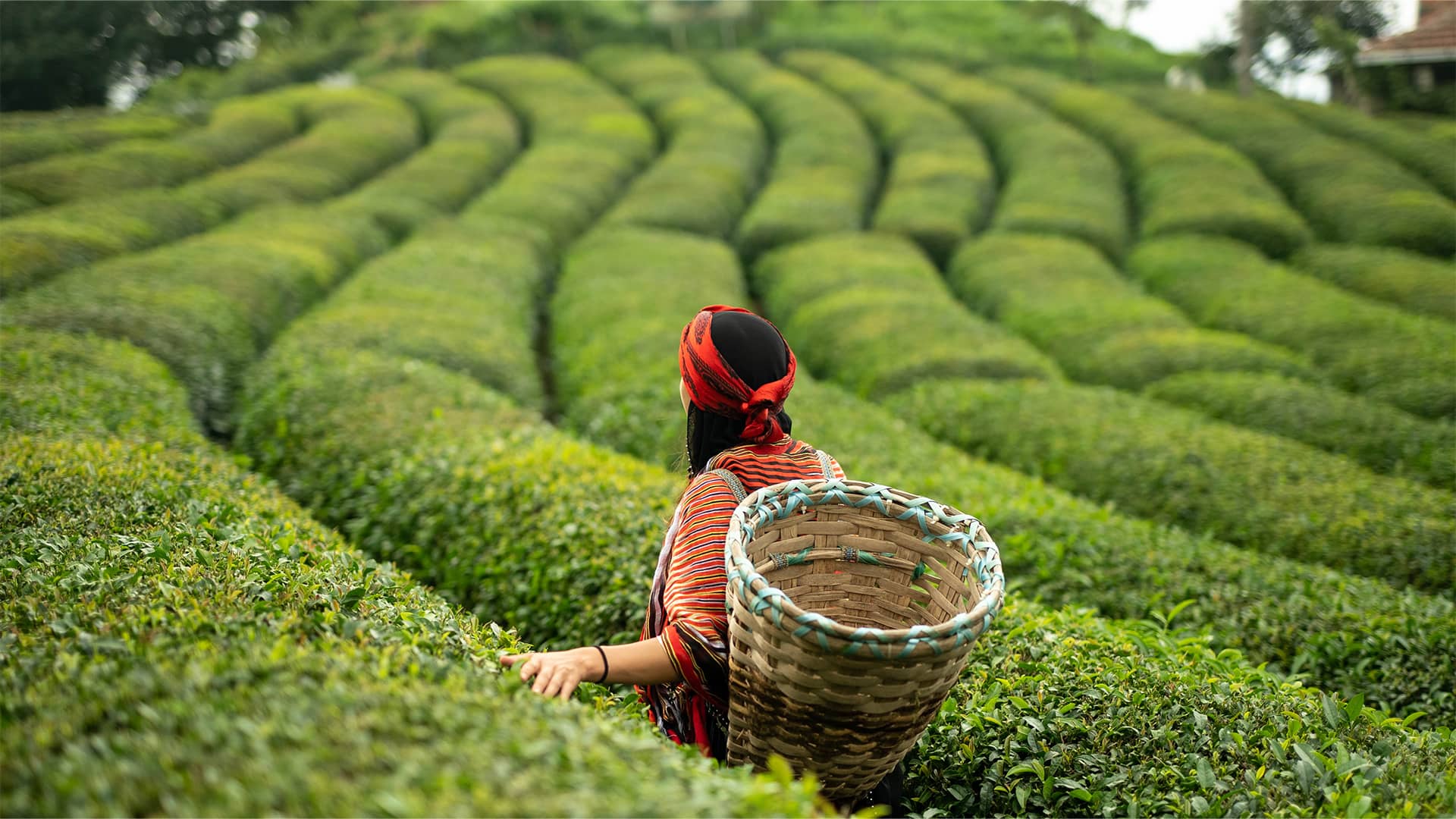
Before the arrival of tea in 1894, the Ottomans brewed various herbs and consumed them like tea. Tea cultivation began in Türkiye towards the end of the Ottoman period and gained momentum during the Turkish Republic era, especially in Rize, Trabzon, and Artvin. Thanks to snowy winters and cool summers in this part of Türkiye, tea can be produced without pesticides, making it completely natural and organic. This is one of the most important factors distinguishing Turkish tea from those worldwide.
Tea brewing is an art. Just like cleaning your brush and adjusting your canvas before painting, you need to prepare before practising the art of brewing Turkish tea. For a perfect cup of Turkish tea, bring the water to a boil and pour it on the upper decker of the teapot. Then refill the bottom part and wait until it comes to a boil as well. This is a much-needed time to let the hot water infuse the tea and make magic happen.
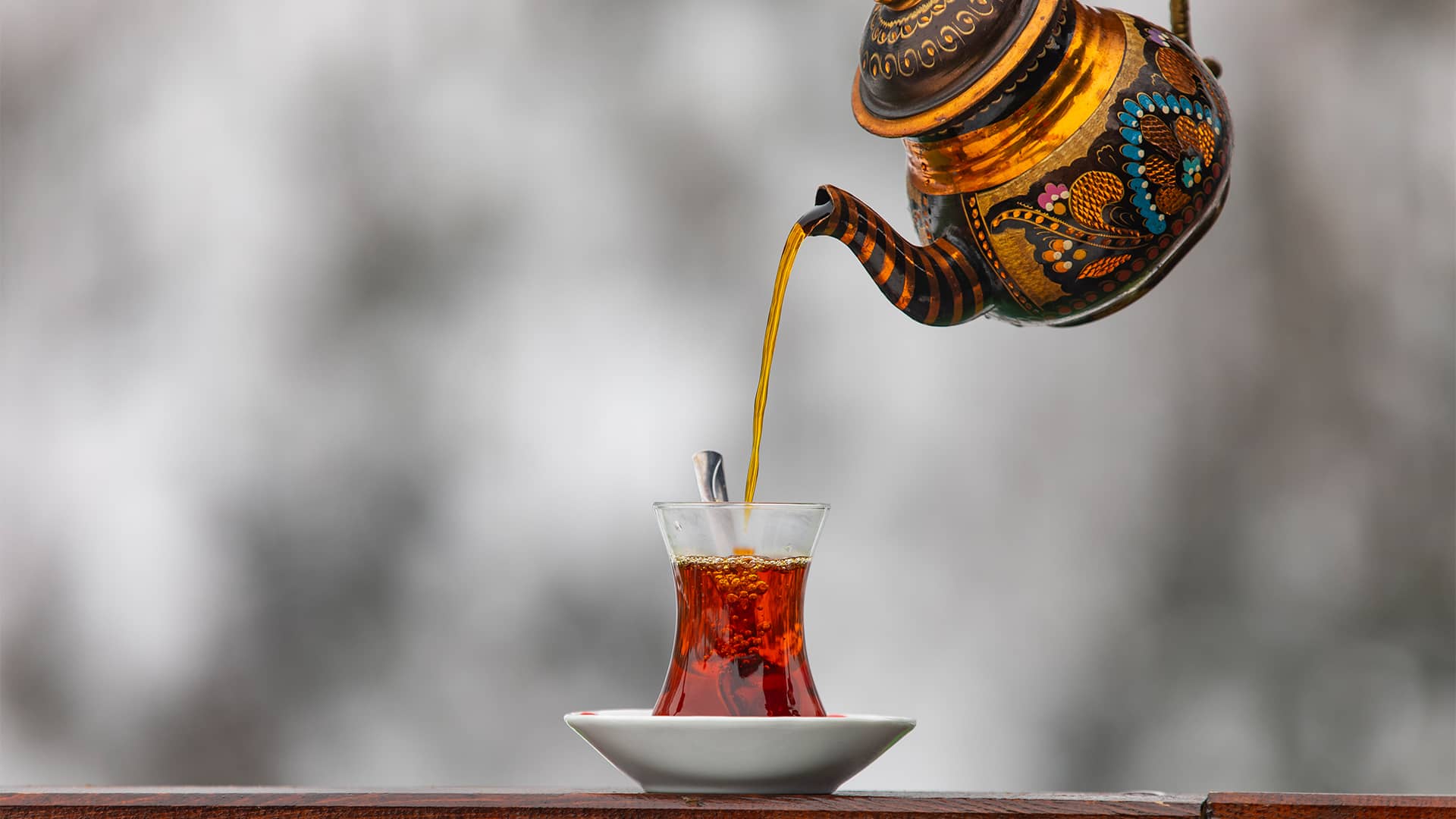
After about 5-6 minutes on low heat, you can check if loose tea leaves are still on the surface. Once all the leaves sink to the bottom, the tea is brewed to perfection. Keep it on low heat; hot water will dilute the brew with each cup.
The perfect colour of Turkish tea is ruby red. The colour you get on your cup depends on your preference. If you like the bitter taste, go for a deep dark tea. The more you dilute it with hot water, the lighter the colour gets and the less bitter it tastes.
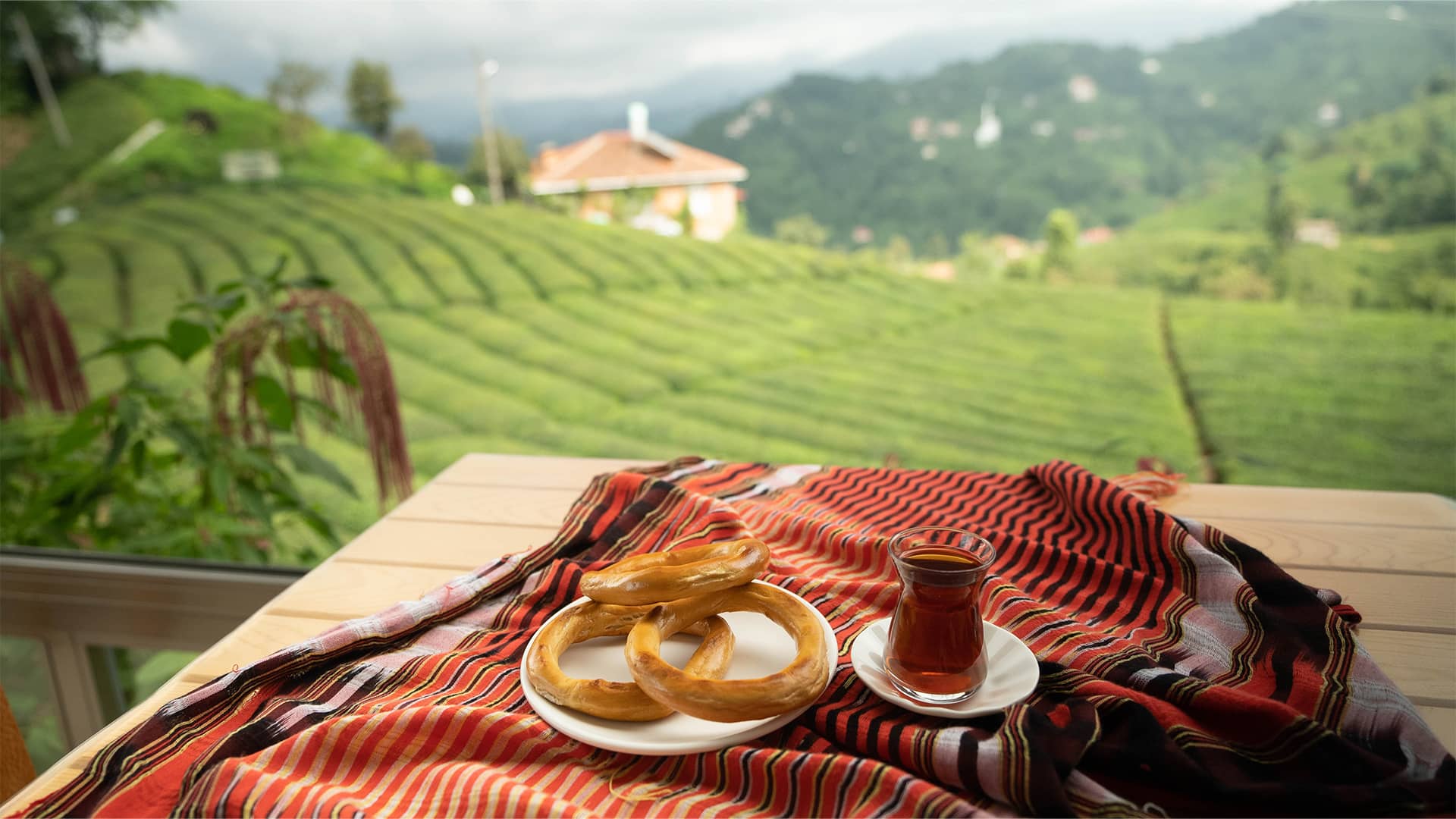
Tea can be consumed at any time of the day. If you are on the go, start your day with a cup of Turkish tea, sesame seed rolls called Simit, and creamy cheese to accompany. In the Black Sea region, where the highlands are so breathtaking and time is plenty, you can go for a full table of Turkish breakfast spread featuring regional breakfast delicacies such as Kuymak, all sorts of local cheese, olive, and jam varieties, fresh sourdough bread baked in stone ovens with woodfire, and a glass of ruby red Turkish tea. What an unforgettable experience… Turkish tea is also the best accompaniment to desserts! Whether it is the traditional types with syrup such as Baklava, Künefe, or Ekmek Kadayıfı, or the worldwide classics like waffles or cookies.
Turkish tea culture is a symbol of hospitality, building and maintaining social ties within communities. It is the perfect ritual to connect with loved ones, friends, and neighbours over a cup of freshly brewed tea and an enriching dialogue. Turkish tea is an essential part of daily life and cultural identity. Türkiye and Azerbaijan’s Turkish tea culture is inscribed on the Representative List of the Intangible Cultural Heritage of Humanity as of 2022.